New Maps in Seven States Could Upset Republican Redistricting Gains
Voters in California, Florida, and five other states are using new congressional districts today that may not perform as predicted by recent redistricting efforts.
By Hana Gray ·
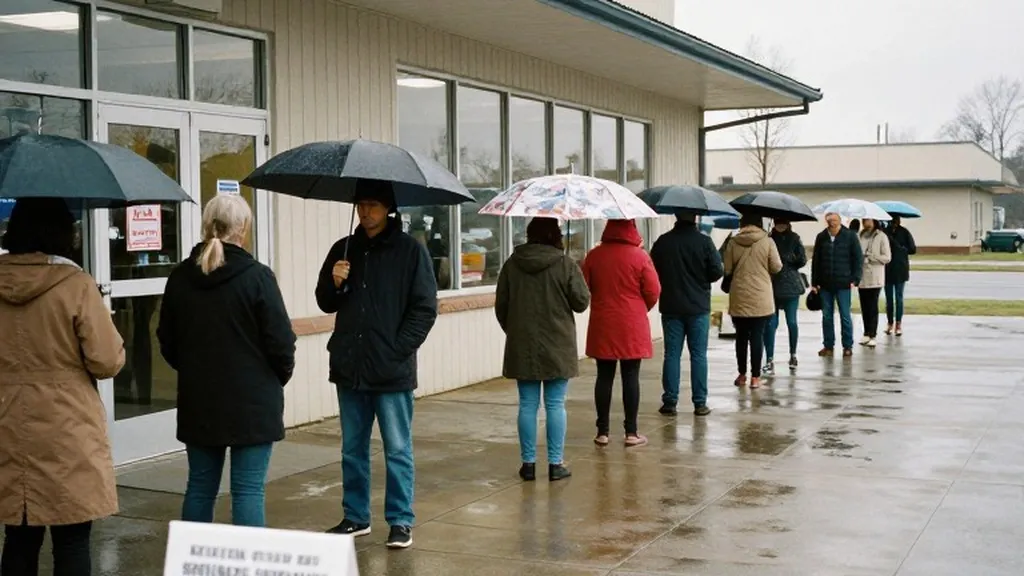
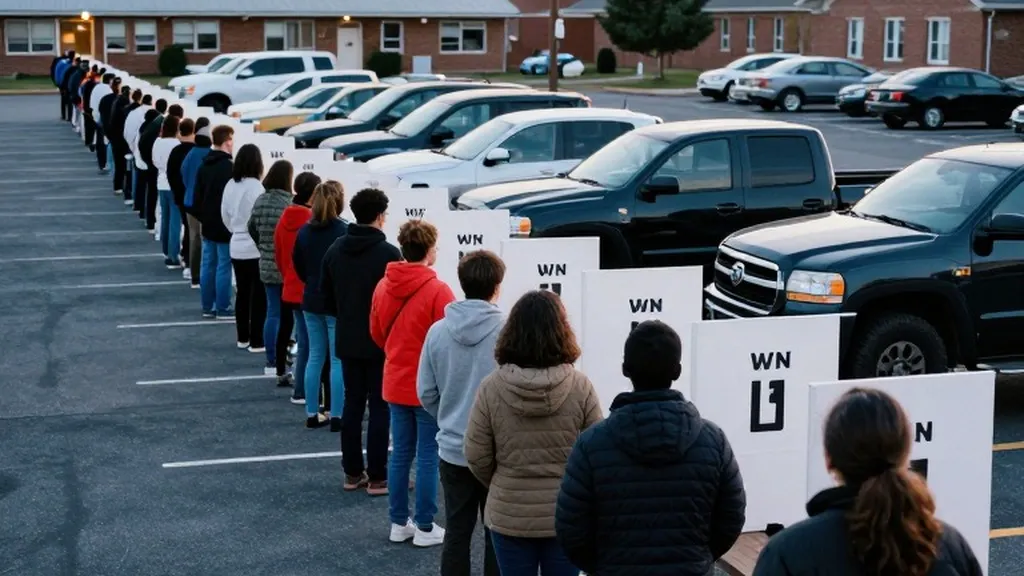
Americans are heading to the polls on Tuesday, November 3, 2026, to determine the balance of power in Congress for the final two years of President Donald Trump's second term. This midterm election puts all 435 U.S. House seats and 35 Senate seats on the ballot. The outcome will dictate whether the president's party maintains its grip on legislation or if the opposition gains the leverage to conduct oversight and investigations. With polls open across the nation, the race remains tightly contested, and the final tallies will not be known for some time.
A central focus of this election is the application of new congressional maps in seven states: California, Florida, Missouri, North Carolina, Tennessee, Texas, and Ohio. These districts were drawn following mid-decade redistricting cycles, a process often intended to solidify the political control of the party holding power at the time of the draw. Republicans utilized this opportunity to create districts that appeared mathematically favorable for their candidates. However, political analysts and party strategists are questioning whether these newly drawn lines will hold up under the pressure of the current economic climate and voter sentiment.
The Associated Press describes the election as a referendum on the administration, noting that voters are struggling with high prices and are angry over an unpopular war with Iran. Recent polling from AP-NORC indicates that only 35 percent of U.S. adults approve of President Trump's job performance, while roughly 70 percent say the country is heading in the wrong direction. These economic frustrations are expected to play a significant role in how voters interact with the new district boundaries. In many of these states, the new maps were designed to pack or crack opposition voters, but the broad discontent with the cost of living may allow Democratic candidates to outperform the historical voting patterns of their specific precincts.
Florida and California represent two of the most significant tests of these new maps. In Florida, the new districts were drawn with a strong Republican lean in mind. However, the state's diverse electorate and high cost of living concerns may lead to unexpected outcomes in key suburban areas. California, which largely votes by mail, has also adopted new boundaries that shift the balance of power within the state delegation. Democrats argue that the new maps in these states do not fully account for the demographic shifts that have occurred since the last decennial census. The result is a set of races where the winner is not guaranteed by the district lines alone.
In the Midwest, Ohio and Missouri are using their new congressional maps for the first time. Ohio, a state where the Senate race between former Senator Sherrod Brown and Senator Jon Husted is closely watched, has districts that were redrawn to benefit Republicans. Yet, the state's economic challenges and the presence of competitive House races suggest that the new lines may not secure a decisive advantage. Missouri, which has traditionally voted Republican, also sees new boundaries that could shift the delegation if Democratic candidates can mobilize voters in previously overlooked areas. The interaction between these new lines and the statewide mood will be critical in determining the final House count.
Texas and North Carolina offer further examples of how new maps may face resistance from voters. Texas, a state with a large and growing population, has new districts that were part of a complex redistricting plan. The Associated Press notes that Texas is competitive, and the new lines may not prevent Democratic gains if the statewide turnout is high. North Carolina, where former Governor Roy Cooper is running for the Senate against Michael Whatley, also uses new congressional districts. The state's swing-voter dynamics and economic concerns may lead to results that differ from the initial expectations set by the redistricting process. These states are pivotal because small shifts in voting behavior can change the control of the House.
The role of money in these races cannot be ignored, as the 2026 elections are likely to be the most expensive in history. Republican committees have outspent their Democratic counterparts, aided by Trump-affiliated groups and Elon Musk. However, an analysis by the Associated Press shows that 88.1 percent of Republican general election TV ad spending went to states and districts that Trump won in 2024. This heavy spending in safe Republican areas may leave less funding for the competitive districts defined by the new maps. Democrats, who outraised their opponents at the candidate level, are focusing their resources on these battlegrounds to challenge the structural advantages of the new districts.
Voters are also responding to the administration's efforts to oversee the election process. A federal judge temporarily barred the Trump administration from carrying out a plan to prevent noncitizen voting, and another judge ordered the administration to stop demanding that California election officials segregate ballots cast by people on lists of suspected noncitizens. These legal moves have added a layer of complexity to the election, with Democrats expressing concern over potential interference and intimidation. The U.S. Postal Service has added staff and special lines to ensure mail ballots are counted on time, a crucial step for states like California, Colorado, and Oregon where mail-in voting is prevalent.
The Senate race is also influenced by the new congressional dynamics, as voters in states with new House maps may apply their feelings about the administration to the upper chamber. In states like Georgia, where Senator Jon Ossoff is running against Representative Mike Collins, and Maine, where Senator Susan Collins faces Troy Jackson, the economic strain and tariffs have made the races competitive. The Associated Press notes that these races are often seen as barometers for the national mood. If Democrats can win these Senate seats, it would signal that the new congressional maps are not the determining factor in the election outcome.