Legal filing details IV struggles during Christa Pike's botched execution
A new court document reveals that medical staff expressed concern over damaged veins before administering the second lethal dose to the 50-year-old inmate.
By Hana Gray ·
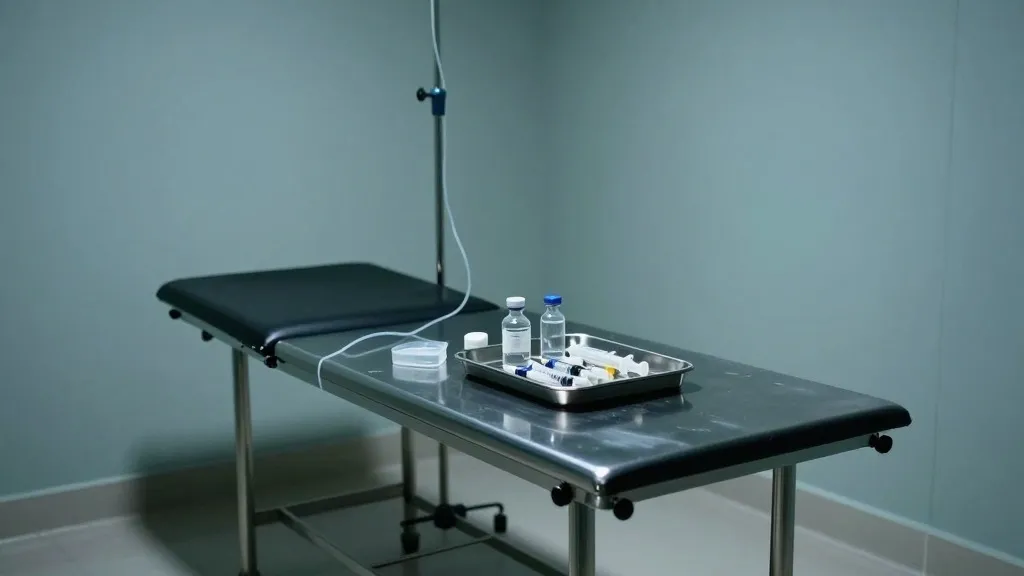
A newly filed court document provides a minute-by-minute account of the medical difficulties that plagued the attempted execution of Christa Pike in Tennessee.
The filing, submitted by attorney Randy Spivey on Thursday, offers the most granular view yet of the events that unfolded on September 30. It details how the medical team struggled for nearly an hour to establish the two intravenous lines required by state protocol. Spivey noted that the staff used approximately ten needles and attempted multiple sites on both of Pike's arms. Despite these efforts, the team faced resistance when trying to push saline through the final access point.
Pike, who is currently 50, was convicted in 1995 for the stabbing death of her classmate Colleen Slemmer. At the time of the crime, Pike was 18 and acted alongside her boyfriend, an act that made her one of the youngest women ever sentenced to capital punishment in the state. Her case has become a focal point for debates regarding the reliability of lethal injection procedures.
The legal filing is part of a broader lawsuit in which death row inmates are challenging the state's execution methods. Kit Thomas, an attorney representing the group, commented on the specific details revealed in the document. He stated, "Our predictions about the likelihood of botched executions have come true, and will continue to come true, without substantial change." This statement highlights the ongoing tension between the state's protocols and the practical realities of carrying out the sentence.
According to Spivey's timeline, the medical team began placing the IVs at 6:34 p.m. While a line in Pike's right arm was secured in about six minutes, the process on her left arm took significantly longer. Spivey described Pike as wincing and grimacing as needles were moved around. She even assisted the team by suggesting they look in her upper arm for a usable vein. By 6:57 p.m., one team member expressed concern that a vein might be blowing, though others were uncertain. A later needle appeared severely bent upon removal. At 7:07 p.m., a staff member declared, "I think it's blown." The team finally decided the left arm IV was successfully placed at 7:13 p.m.
Phone communication with the execution chamber started roughly five minutes after the IV placement. Spivey reported that the personnel administering the drugs from an adjoining room seemed to repeatedly ask the IV team to check Pike's left arm. It is not precisely known when the pentobarbital entered the lines, but at 7:34 p.m., Pike said, "I feel like my arm is about to bust. It burns." Shortly after speaking with her spiritual adviser, she began making an agitated snoring sound.
Over the next half hour, Spivey observed Pike straining, flinching, and struggling to breathe. He requested to use a phone but was routed through the facility for seven minutes before being allowed to call colleagues. At 8:22 p.m., he urged them to halt the process, noting that a third dose was not authorized, and told the deputy attorney general that Pike required immediate medical attention.
An ambulance was dispatched at 8:50 p.m., and life-saving measures were reported to be underway about 20 minutes later. The vehicle arrived at the hospital at 9:14 p.m. Pike survived two doses of the drug, a scenario for which the state's protocol does not provide clear instructions. She remained on a ventilator for several days, with her lawyers at one point fearing for her life. She has since regained consciousness, was discharged from the hospital, and has returned to prison.
The incident has intensified scrutiny of Tennessee's execution practices. As the legal challenge proceeds, the detailed account of the IV difficulties and the inmate's physical distress will likely play a central role in arguments about the constitutionality of the current procedures.
Source: CBC News