435 Seats, 46 Battles, and the New Maps: The House Race That Could Flip Congress
With Democrats holding 214 seats, a net gain of three districts is all that stands between them and control of the House, a margin that hinges on the 46 battlegrounds and seven new maps.
By Hana Gray ·
The U.S. House of Representatives is the central battlefield of this midterm election, with all 435 seats up for grabs on Tuesday. The current balance of power is razor thin, with Republicans holding 218 seats and Democrats holding 214, leaving one seat to an independent and a few vacancies. This configuration means the margin for victory is incredibly narrow. Democrats need to win just three more districts than they currently hold to seize the majority. Conversely, Republicans can afford to lose no more than two seats to maintain their grip on the chamber.
The Associated Press describes the election as a referendum on the president's second term, noting that voters are struggling with high prices and anger over an unpopular war with Iran. AP-NORC polling indicates that only 35 percent of U.S. adults approve of the president's job performance, while 25 percent approve of his handling of the economy. About seven in 10 Americans say the country is heading in the wrong direction, and most blame the president for high prices. These economic concerns are driving voter turnout in the 46 battleground districts that Ballotpedia has identified as competitive.
These 46 districts represent the true swing of the election. They include 25 seats currently held by Democrats and 21 held by Republicans. The demographic makeup of these areas is complex, with 21 Democratic-held districts that voted for the president in 2024 and nine Republican-held districts that voted for Vice President Kamala Harris. This split suggests that partisan loyalty is less deterministic than it was in previous cycles, making every vote in these specific areas critical for determining the final tally.
A significant factor in this year's House race is the use of new congressional maps in seven states. California, Florida, Missouri, North Carolina, Tennessee, and Texas are all using new maps resulting from mid-decade redistricting, along with Ohio. Republicans attempted to use redistricting to beat the typical midterm pattern where a president's party loses seats. However, the AP notes that new districts in Florida and elsewhere may not vote as drawn, adding an element of uncertainty to the Republican strategy. The new maps have reshaped the competitive landscape, turning previously safe seats into toss-ups and vice versa.
The financial dynamics of the race are stark. The 2026 elections are likely to be the most expensive in history, with Republican committees outraising and outspending their Democratic counterparts at the committee level. This spending was helped by Trump-affiliated groups and Elon Musk. An AP analysis of AdImpact data shows that 88.1 percent of Republican general election TV ad spending went to states and districts the president won in 2024, including more than $850 million in areas where he won by 10 points or more. Despite this committee-level advantage, Democrats outraised their opponents at the candidate level, suggesting a different allocation of resources on the ground.
The mood among Democrats is described by the AP as cautiously optimistic, with party leaders framing the race as a chance to restore oversight and address the cost of living. DCCC Chair Rep. Suzan DelBene stated, "The American people are angry. They want change." If Democrats win the House, House Democratic Leader Hakeem Jeffries would be the first Black speaker and has outlined a 100-day agenda focused on the cost of living and oversight of the administration. This potential shift in leadership is a key motivator for Democratic voters in the battleground districts.
Republicans, meanwhile, are bracing for a potential loss in the House while fighting to hold the Senate. RNC Chairman Joe Gruters emphasized the importance of turnout, saying, "Everything depends on turnout. If we turn out our voters, we win, and that's what we've been planning for." The party is relying on the momentum of the president's rallies, including his recent stop in Salina, Kansas, where he urged voters to pretend he was on the ballot. Many Republican candidates have kept their distance from the president's more controversial statements, a strategy aimed at appealing to moderate voters in the 46 competitive districts.
The administration's involvement in election administration has also raised stakes for the House race. A federal judge temporarily barred the Trump administration from carrying out a plan to prevent noncitizen voting, a move critics say risks disenfranchising eligible voters. The administration also sued in Alaska and California, and Democrats have expressed fear of interference and intimidation as the Justice Department threatens to prosecute local election officials. These legal battles create a backdrop of uncertainty that could influence how voters approach their ballots in the final hours of the day.
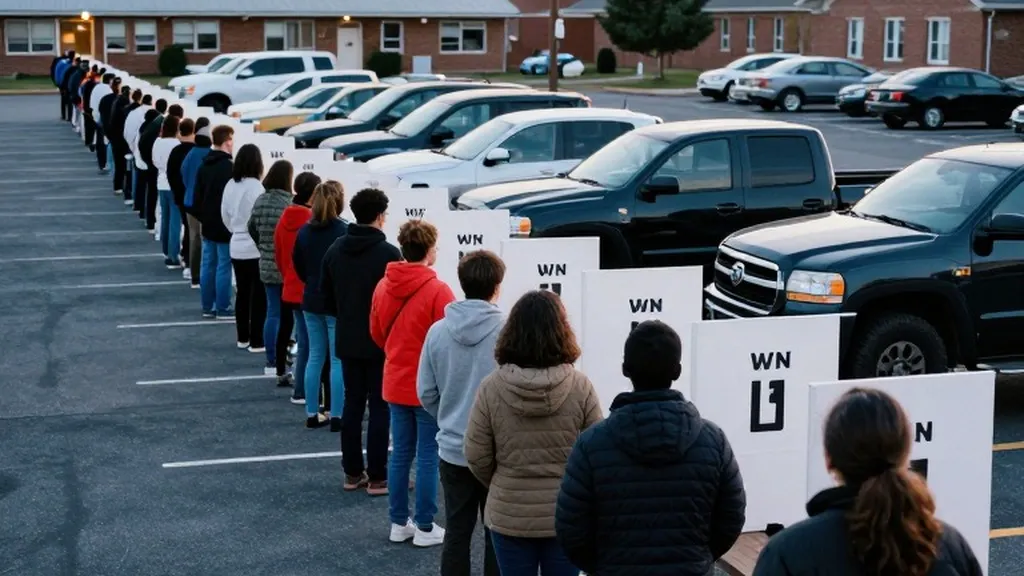
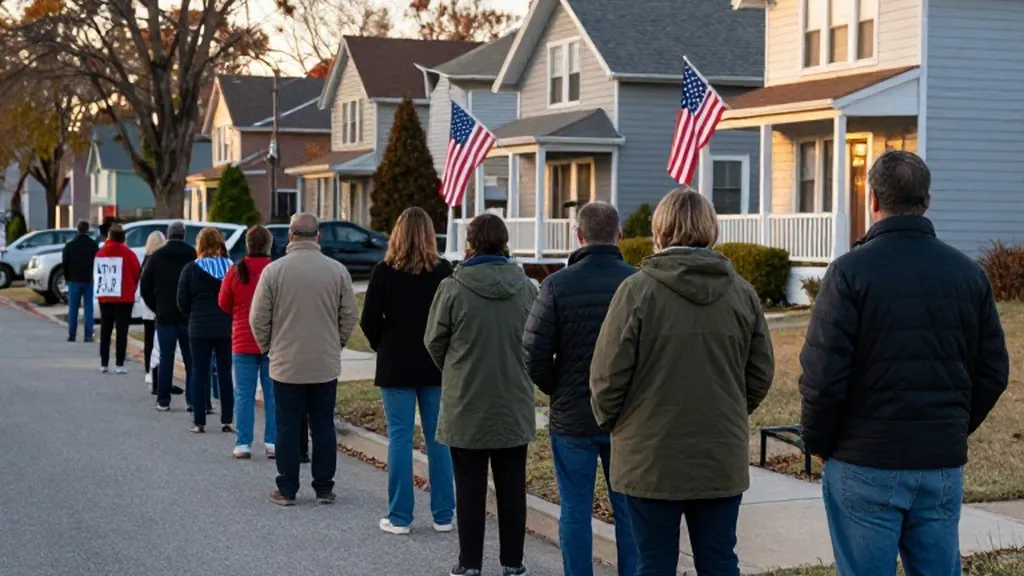
Voters are heading to the polls with a clear understanding of what is at stake. More than 57 million people had already voted as of Monday, surpassing the early vote of four years ago in many closely watched states. The U.S. Postal Service added hours, staff, and special lines to ensure mail ballots are counted on time, a logistical effort that is crucial in states like California and Colorado where mail voting is prevalent. The sheer volume of early voting suggests that the final margin in the House will be determined by the last few hours of in-person voting and the counting of mail ballots.
The outcome of the House race will have immediate implications for the president's final two years in office. If Democrats win even one chamber, investigations and possible impeachment proceedings become likely. A strong Democratic night would also boost potential 2028 candidates such as Gavin Newsom, JB Pritzker, and Pete Buttigieg, while potentially complicating the path for Vice President JD Vance. The 46 battleground districts and the seven new maps will ultimately decide whether the president's party retains its House majority or whether the Democrats achieve the three-seat gain necessary to take control.