Breaking: Election Day is here! Make your selections: as Trump faces costs and Iran war
Voters across the nation decide the balance of power in a midterm marked by high costs and a contentious war in Iran, as Democrats seek to reclaim the House and hold the Senate.
By Aisha Saeed ·
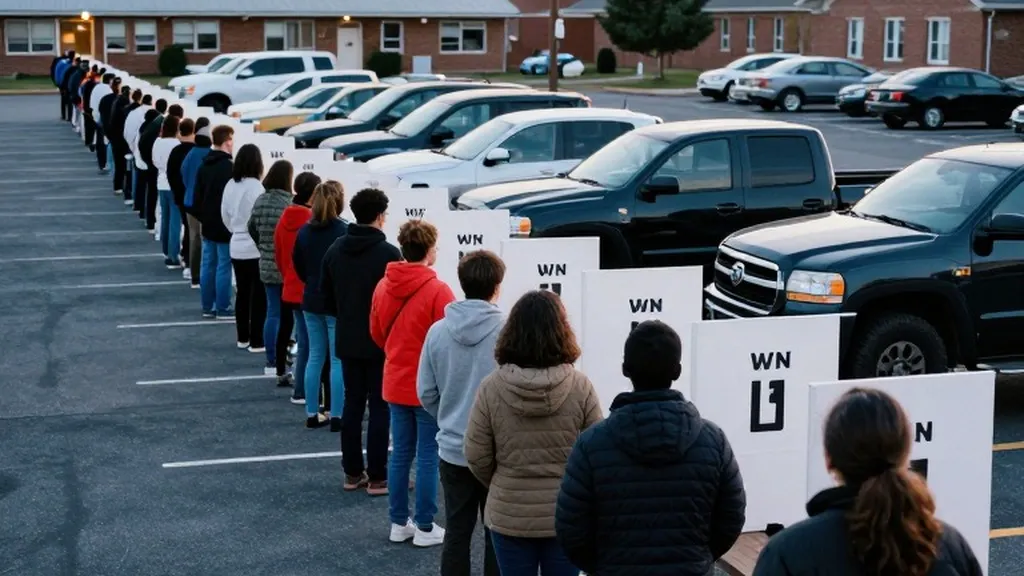
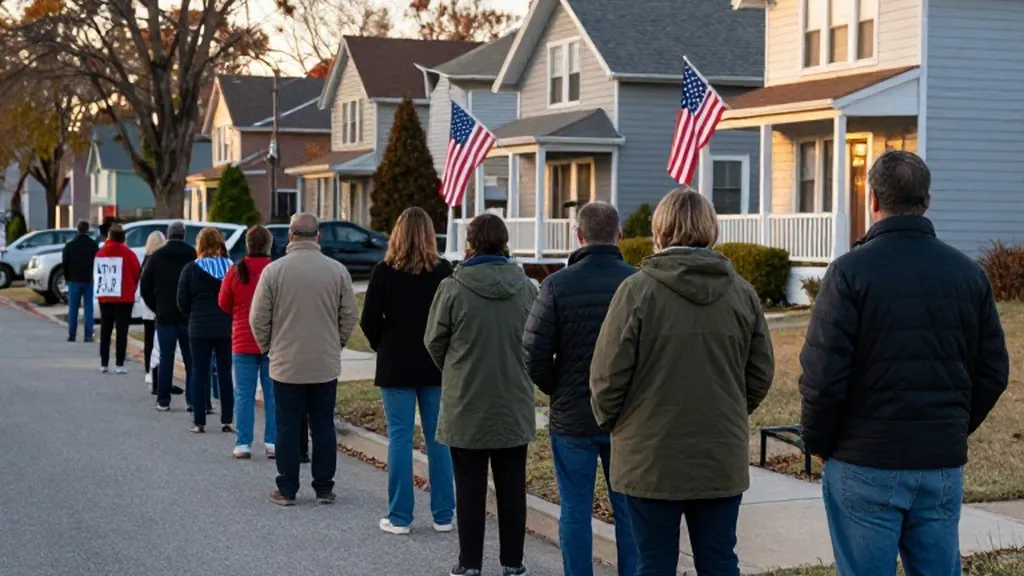
It is Election Day, Tuesday, November 3, 2026, and voters are heading to the polls to decide who controls Congress for the final two years of President Donald Trump's second term. According to the Associated Press, this midterm is being viewed as a referendum on the administration, with many Americans struggling with high prices and anger over an unpopular war with Iran. More than 57 million people had already cast their ballots as of Monday, surpassing the early vote totals from four years ago in many closely watched states. The day is critical because one or two seats could tip the balance in either chamber, making every vote count in the fight for legislative control.
For Democrats, the path to power is clear but narrow. House Democratic Leader Hakeem Jeffries has outlined a 100-day agenda focused on the cost of living and oversight of the administration. If Democrats win even one chamber, investigations and possible impeachment proceedings become likely. Jeffries would become the first Black speaker of the House if his party takes the chamber, a milestone that underscores the historic nature of the day. The party is cautiously optimistic, aiming to overcome the obstacles posed by redistricting and the significant financial advantage held by their opponents.
The financial landscape of the 2026 elections is set to be the most expensive in history. Republican committees have outraised and outspent Democratic committees, aided by Trump-affiliated groups and Elon Musk. According to an AP analysis of AdImpact data, 88.1% of Republican general election TV ad spending went to states and districts that Trump won in 2024. This included more than $850 million in spending where he won by 10 points or more. However, at the candidate level, Democrats have outraised their opponents, suggesting that grassroots efforts are competing effectively against the national war chests.
In the U.S. House, all 435 seats are up for grabs. Republicans currently hold 218 seats, while Democrats hold 214, with one independent and some vacancies. Democrats need a net gain of three districts to secure a majority, whereas Republicans can afford to lose no more than two. Ballotpedia counts 46 battleground districts, with 25 held by Democrats and 21 by Republicans. The map is complicated by new congressional boundaries in six states: California, Florida, Missouri, North Carolina, Tennessee, and Texas, with Ohio also using a new map. These changes add a layer of uncertainty to a race that is already tight.
The Senate race is equally pivotal, with 35 seats on the ballot, including 33 regular elections and two special elections. Republicans hold 53 seats, Democrats 45, and two independents caucus with Democrats. Democrats need a net gain of four seats for a majority, while Republicans can lose only two. Thirteen Senate races are considered battlegrounds, with states like Maine, Iowa, and Georgia closely watched. In Maine, the AP notes that economic strain and tariffs have made the state competitive for Democratic former state Senate President Troy Jackson against Republican Sen. Susan Collins. In Georgia, Sen. Jon Ossoff faces Republican Rep. Mike Collins in a race that leans Democratic according to current ratings.
Voters are also deciding on 36 governorships, a race that could shift the balance of state power. Republicans currently hold 26 governor's offices, while Democrats hold 24. Democrats would need a net gain of two governorships to achieve a nationwide majority for the first time since 2010. Key matchups include Georgia, where Republican health care executive Rick Jackson faces Democratic former Atlanta Mayor Keisha Lance Bottoms. In Ohio, Republican Vivek Ramaswamy competes against Democrat Amy Acton. The AP describes Texas, Florida, and Iowa as competitive governor races, adding to the national stakes of the day.
The mood among voters is driven by personal finances and health care costs. James Moore, a 57-year-old librarian in Raleigh, North Carolina, summarized the sentiment for many Americans. He stated, "I'm paying more taxes. I'm paying more for my healthcare. I'm paying more for everything." This frustration is echoed by DCCC Chair Rep. Suzan DelBene, who said, "The American people are angry. They want change." The AP-NORC polling indicates that 35% of U.S. adults approve of Trump's job performance, while about 7 in 10 say the country is heading in the wrong direction. Most blame the president for high prices, creating a backdrop of discontent that Democrats hope to harness.
President Trump has been actively campaigning, holding dozens of rallies and ending his tour in Salina, Kansas, on Sunday. He told supporters, "I really want you to pretend I'm on the ballot." His schedule included stops in Mississippi, South Carolina, and Texas, though many Republican candidates kept their distance. Trump has continued to make claims about voting fraud, including assertions that noncitizens vote in large numbers. His administration has sued in Alaska and California, and Democrats fear interference as the Justice Department threatens to prosecute local election officials. A federal judge temporarily barred the administration from carrying out a plan to prevent noncitizen voting, a move critics say risks disenfranchising eligible voters.
In the House, the dynamics of the race are shaped by the 60 incumbents who did not run again, including 23 Democrats and 37 Republicans. Twenty-one Democratic-held districts voted for Trump in 2024, while nine Republican-held districts voted for Kamala Harris. These cross-cutting allegiances make the 46 battleground districts particularly volatile. The new maps in states like Florida and North Carolina may not vote as drawn, adding complexity to the strategic calculations of both parties. The outcome in these districts will determine whether Democrats can secure the three-seat gain they need to take control of the chamber.
In the Senate, the special elections for the rest of the terms of Marco Rubio and JD Vance add another layer of complexity. Republicans hold a 53-45 lead, but Democrats can flip the chamber with a four-seat gain. The race in Ohio features Democratic former Sen. Sherrod Brown against Republican Sen. Jon Husted. In Michigan, Republican former Rep. Mike Rogers faces Democrat Abdul El-Sayed, with El-Sayed's former primary opponent Haley Stevens endorsing Rogers on Sunday. In Texas, Republican Attorney General Ken Paxton, whom Trump backed over Sen. John Cornyn in the primary, competes against Democrat James Talarico. These matchups will be decisive in determining the Senate's composition.
Voters can find their polling place at vote.gov or their state election office. Anyone in line when polls close is entitled to vote, so early arrival is encouraged. Poll hours vary by state, with most opening between 6 a.m. and 8 a.m. and closing between 7 p.m. and 9 p.m. For example, in Florida, polls are open from 7 a.m. to 7 p.m., while in New York, they open at 6 a.m. and close at 9 p.m. In North Carolina, polls are open from 6:30 a.m. to 7:30 p.m. Voters should check their specific state's ID rules before heading to the polls, as requirements vary. The U.S. Postal Service has added hours, staff, and special lines to ensure mail ballots are counted on time, a critical step in a mail-heavy election cycle.