Senate 2026: The 13 Races Deciding Control of the Chamber
With 35 seats in play, the fight for Senate control comes down to 13 competitive races where economic anxiety and partisan spending are shaping the outcome.
By Naomi Whitaker ·
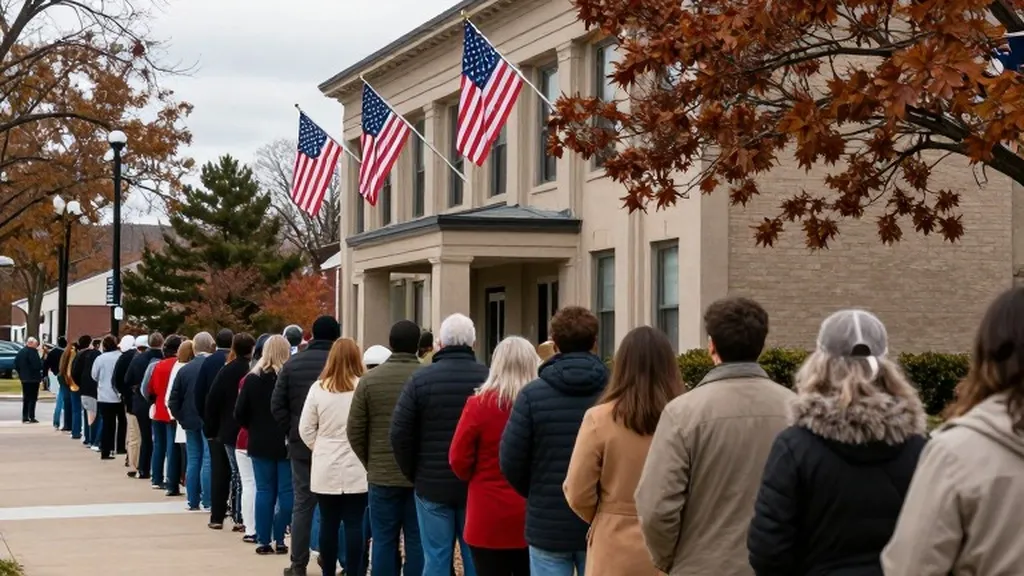
Voters across the nation are casting ballots in the 2026 midterm elections, a contest that will determine the balance of power in the U.S. Senate for the final two years of President Donald Trump's second term. Thirty-five Senate seats are up for grabs, comprising 33 regular elections and two special elections to fill the terms held by Vice President JD Vance in Ohio and Senator Marco Rubio in Florida. Republicans currently hold 53 seats in the chamber, while Democrats control 45, with two independents caucusing with the Democratic party. For Democrats to secure a majority, they need a net gain of four seats. Republicans can afford to lose only two seats to retain control. Eleven senators, including four Democrats and seven Republicans, are not seeking re-election, leaving several key states open to new leadership.
The race for Senate control hinges on a group of thirteen battleground states identified by Ballotpedia. These races span a wide range of political leanings, from the deep red of Montana and Nebraska to the competitive swing states of Georgia and Michigan. In Montana, the seat is open as Steve Daines retires, a state that Trump won by 19.9 points in 2024. Similarly, in Nebraska, incumbent Pete Ricketts faces a tough challenge in a state that voted for Trump by 20.3 points. In Kansas, a traditionally Republican stronghold, the race between incumbent Roger Marshall and his opponent has become central to the national fight for control. Ballotpedia notes that Kansas voted for Trump by 16.2 points in 2024, yet it is now viewed as a critical tipping point.
Several of the most closely watched races feature high-profile candidates in states that voted for President Trump in 2024. In Michigan, the seat is open due to the retirement of Gary Peters. The race pits Republican former Representative Mike Rogers against Democrat Abdul El-Sayed. The AP notes that on Sunday, El-Sayed's former primary opponent, Haley Stevens, endorsed Rogers, adding a layer of complexity to the contest. In North Carolina, Democratic former Governor Roy Cooper is challenging former Republican National Committee chair Michael Whatley. Thom Tillis, the retiring incumbent, stepped back after clashing with Trump. The state voted for Trump by 3.3 points in the last presidential election, making it a key target for Democrats seeking to flip seats.
In Georgia, Senator Jon Ossoff is defending his seat against Republican Representative Mike Collins. The AP describes this as a crucial matchup in a state that Trump won by 2.2 points in 2024. In Ohio, Democratic former Senator Sherrod Brown is running against incumbent Jon Husted in a special election. This race is significant because it determines the remainder of the term originally won by JD Vance. In Texas, Republican Attorney General Ken Paxton is running against Democrat James Talarico. Trump backed Paxton over Senator John Cornyn in the primary, a move that shaped the field. The AP reports that the state voted for Trump by 13.6 points in 2024, making a Democratic victory there a major upset.
The political landscape is further complicated by the influence of money and redistricting. The 2026 elections are likely to be the most expensive in history, according to the AP. Republican committees outraised and outspent Democratic committees at the committee level, aided by Trump-affiliated groups and Elon Musk. However, at the candidate level, Democrats outraised their opponents. An AP analysis of AdImpact data shows that 88.1 percent of Republican general election television ad spending went to states and districts that Trump won in 2024. This includes more than $850 million spent in districts where he won by ten points or more. Six states are using new congressional maps after mid-decade redistricting, which may impact how votes are tallied in these critical races.
Voters are weighing the cost of living and the administration's handling of foreign policy, particularly the war with Iran. The AP describes the election as a referendum on Trump's second term, with many Americans struggling with high prices. A recent AP-NORC poll found that 35 percent of U.S. adults approve of Trump's job performance, while 25 percent approve of his handling of the economy. About seven in 10 say the country is heading in the wrong direction. James Moore, a 57-year-old librarian in Raleigh, North Carolina, expressed this sentiment, stating that he is paying more for taxes, healthcare, and everything else. Mark Barker, a voter in Palm Beach Gardens, Florida, offered a contrasting view, saying he thinks Trump is doing an awesome job.
The administration has been active in election administration, filing lawsuits in Alaska and California related to voting rules. A federal judge temporarily barred the administration from carrying out a plan to prevent noncitizen voting, a move critics say risks disenfranchising eligible voters. In Alaska, the Trump administration filed a lawsuit related to the certification of the Senate result. In California, a judge ordered the administration to stop demanding that officials segregate ballots cast by people on lists of suspected noncitizens. The U.S. Postal Service added hours and staff to ensure mail ballots are counted on time. These administrative battles have raised concerns among Democrats about potential interference and intimidation of local election officials.
Republican leadership is focused on turnout to prevent the typical midterm losses. RNC Chairman Joe Gruters stated that everything depends on turnout and that if they turn out their voters, they win. Conversely, DCCC Chair Rep. Suzan DelBene said the American people are angry and want change. Democrats are cautiously optimistic, with House Democratic Leader Hakeem Jeffries outlining a 100-day agenda on cost of living and oversight if his party gains control. A victory for Democrats in either chamber would make investigations and possible impeachment proceedings more likely. Republicans are trying to beat the historical pattern of midterm losses using redistricting, but new districts in states like Florida may not vote as drawn.