Judge flags frustration over any raid on Comey's home as third case filed
A federal judge warned the Justice Department he would be upset if agents staged a predawn raid on James Comey's residence while prosecutors pursued a case filed without a grand jury.
By Naomi Whitaker ·
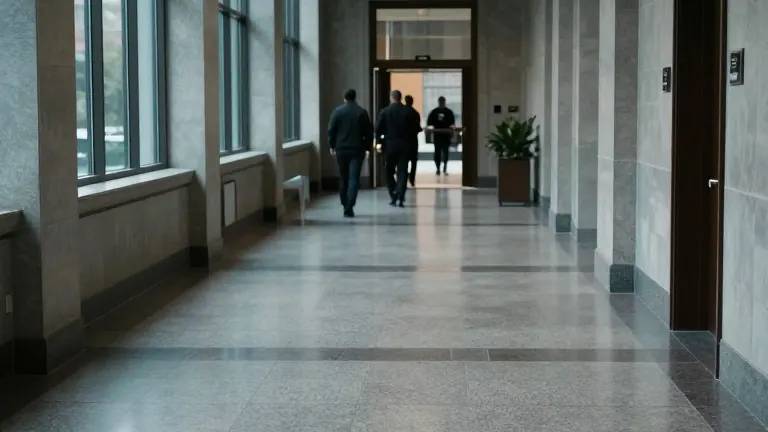
U.S. District Judge Trevor McFadden told a federal courtroom on Friday that he would be upset if the Justice Department conducted an overnight operation at former FBI Director James Comey's home. "I will be extremely frustrated if there is some sort of predawn raid or black pajamas" outside the residence, McFadden said, according to the judge's remarks in court. Special U.S. attorney Dustin Farahnak responded that prosecutors would not act in a way that would offend the court.
Comey's attorney, Ephraim McDowell, told the court that FBI agents were positioned outside his client's home. The administration filed the case on October 5, 2026, exactly 10 years after a New York Times article described how Yahoo complied with a secret Foreign Intelligence Surveillance Court order that led to the systematic scanning of user email traffic. The filing came via a criminal information submitted directly by the government rather than through a grand jury indictment or a criminal complaint reviewed by a judge.
Prosecutors allege that Comey authorized staff in October 2016 to speak with a reporter to correct a separate report about classified information. Comey's lawyers have asked Judge McFadden to dismiss the matter, arguing that no valid case exists because the government did not secure an indictment from a grand jury before the 10-year statute of limitations expired.
The filing marks the third criminal case brought against Comey since September 2025, when a grand jury in the Eastern District of Virginia returned an indictment. That case was later dismissed after Lindsey Halligan was found to have been unlawfully acting as a federal prosecutor. A second case, filed in the Eastern District of North Carolina, involved an Instagram photograph of seashells arranged to spell "8647"; prosecutors called it a threat against the president, while Comey's team says it was not intended as one, and a federal judge has not yet ruled on the request to dismiss.
Judge McFadden said he would permit the government to seek an indictment from a grand jury if it chose to do so. He noted that grand juries can act in unexpected ways and that if a grand jury declines to indict, the current proceedings would amount to an exercise in futility.
Sarah Krissoff, a former federal prosecutor, said prosecutors bypassed the standard process for bringing charges. "They brought the case in such a way that undermines their complaint in the first place," Krissoff said, adding that if prosecutors had evidence, they should have filed a complaint for a judge to sign or presented the matter to a grand jury.
The hearing took place after a federal grand jury in Washington rejected an indictment against Cassidy Hutchinson, a witness for the Jan. 6 committee, earlier in the week. A federal grand jury also declined to indict six members of Congress earlier this year over a social media video the president disapproved of. The case against Comey was unsealed Monday, and McFadden set Friday's hearing to consider the defense motion to dismiss.
Source: NBC 6 South Florida