Election Night Watch: Seven States Determine Senate Control
Tighter margins in seven states and ranked-choice voting in two could extend the count for days, while House leadership likely resolves earlier.
By Naomi Whitaker ·
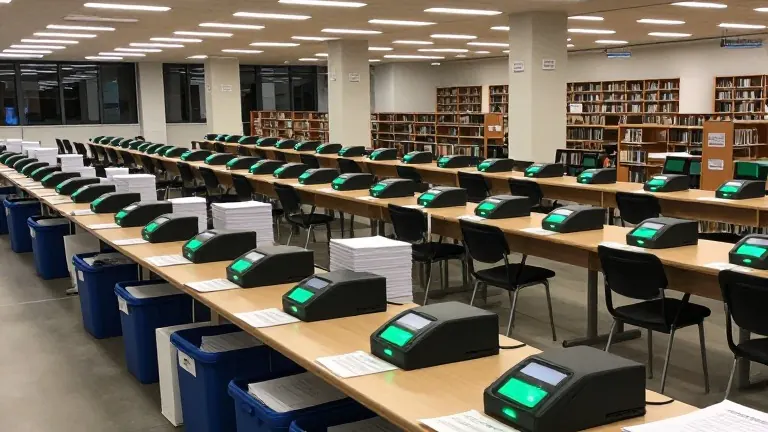
The 2026 midterm election presents a complex counting timeline for voters and analysts alike. While House control may be determined quickly due to larger electoral margins, Senate control hinges on seven tight races and two states using ranked-choice voting, potentially extending results into the following week.
Polls close in stages across the country, beginning at 7 p.m. ET in Georgia, Indiana, Kentucky, South Carolina, Virginia, and Vermont. In Georgia, Secretary of State Brad Raffensperger noted that new laws require counties to report results within an hour of polls closing. The state’s governor’s race between Republican Rick Jackson and Democrat Keisha Lance Bottoms is among the most competitive in the South. In South Carolina, the Senate race between Darline Graham and Annie Andrews remains a toss-up in national polls, despite the Cook Political Report favoring Republicans.
At 7:30 p.m. ET, North Carolina and Ohio close their polls. North Carolina’s Senate contest between Roy Cooper and Michael Whatley is viewed as the most likely Democratic flip, a critical move for the party’s path to a majority. In Ohio, the race between Republican Sen. Jon Husted and former Democrat Sherrod Brown is deadlocked. Ohio has shifted from a swing state to a solidly Republican one in the last decade, making this close contest a focal point for national observers.
By 8 p.m. ET, polls close in more than half of the country, including Florida, Pennsylvania, and Maine. In Florida, the redistricted maps face their first test, with seven competitive House seats identified by the Cook Political Report. Pennsylvania offers Democrats a potential surge, as three previously toss-up House races now lean Democratic. In Maine, Republican Sen. Susan Collins faces a challenge from Democrat Troy Jackson in a state that supported Kamala Harris in 2024.
The 9 p.m. ET block includes major closures in Arizona, Iowa, Michigan, and Texas. Michigan’s governor’s race between Abdul El-Sayed and Mike Rogers has drawn significant attention following Islamophobic advertising campaigns. In Texas, Democrat James Talarico challenges Republican Ken Paxton for governor, a race where a Democratic statewide win would be a first since the early 1990s. Iowa and Kansas also feature competitive Senate races that could influence the chamber’s balance of power.
Late-night closures at 11 p.m. ET include California, Oregon, and Washington. California’s new congressional maps, approved by voters in 2025 in response to redistricting battles, have shifted close House races toward Democrats in the final weeks. The state’s redistricting effort aimed to reduce the number of safe Republican seats, altering the competitive landscape for the 2026 cycle.
The outcome of these specific contests will determine whether Democrats can secure a Senate majority. The combination of tight margins in traditional Republican states and the procedural delays inherent in ranked-choice voting means that final certification could take days rather than hours.
Source: WLRN