Dakar's Youth Olympics: $60 Million in Games, 54% Meat Price Hike
Senegal hosts its first Olympic event while families navigate soaring costs for food, fuel, and shelter.
By Hana Gray ·
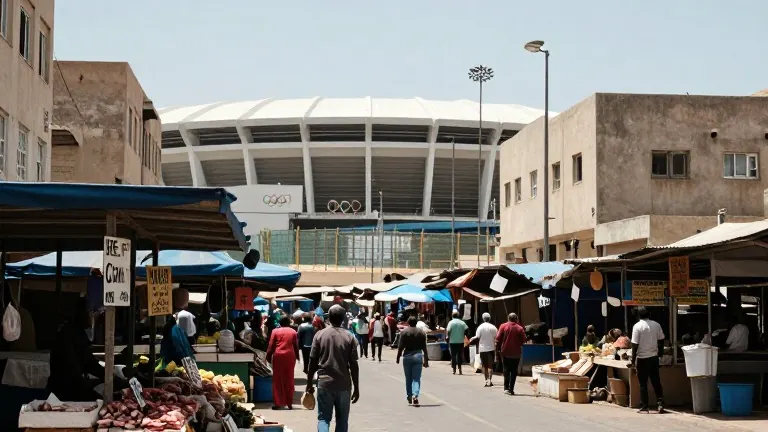
Paulina Netinan Nodjibougada, a 26-year-old accounting student in Dakar, says the Youth Olympic Games feel distant from her daily reality. She struggles to find work and cover living expenses in the capital. The event, which began Saturday and runs through Nov. 13, has brought about 2,700 athletes to Senegal. For many residents, the celebration clashes with the immediate need to earn a living.
"I’m not very enthusiastic because there are too many problems," Nodjibougada said. "We have too many worries in the family." She noted that the government must consider the needs of young people, who make up roughly 75% of the population. Youth unemployment is approximately 23%, and most employed young Senegalese work in the informal sector.
The economic pressure is visible in market prices. Momar Assane Diouf, a 33-year-old entrepreneur, reported that meat prices jumped from 3,000 CFA francs to 5,500 CFA francs per kilogram in just a few months. That is a 54% increase. Diouf now juggles multiple jobs to support his family, including his 8-year-old daughter. He stated that the high prices and lack of quality of life are difficult for all Senegalese.
The government committed 36 billion CFA francs to the Games, with 11.3 billion CFA francs going to sports venue renovations. This spending occurs while Senegal manages a large debt burden. An audit last year found billions of dollars in hidden borrowing from the previous administration. The country is currently seeking a $2.2 billion loan from the International Monetary Fund, which requires spending cuts. In August, officials raised gasoline and diesel prices because they could no longer offset global oil cost increases.
Frustration over these costs has led to street protests. In February, a student died during unrest at Cheikh Anta Diop University over unpaid financial aid. In April, workers marched demanding better conditions. The Olympic spending has intensified this debate. A 500 million CFA franc contribution from a foundation linked to the president’s wife aimed to buy tickets for disadvantaged youth. Critics questioned the source of the funds, though authorities said the money came from donors.
In Medina, a working-class neighborhood, local businesses have suffered from preparations. Mamadou Wadji, 37, leads a shoemakers' cooperative. Members were moved from a market near the Iba Mar Diop stadium into an unfinished school building. Wadji said sales dropped because customers could not find them. His daily household budget doubled from 5,000 CFA francs to 10,000 CFA francs. He noted that he cannot go to the stadium while his family waits for food.
President Bassirou Diomaye Faye defended the Games by citing infrastructure improvements and contracts for local companies. International partners and the International Olympic Committee are helping finance the event. Despite road repairs in some areas, residents face new road closures and reserved lanes around venues. Tickets start at 1,000 CFA francs, but attending often means missing work hours.
Diouf said he wants the Games to succeed but cautioned against viewing them as a long-term solution. He observed that life remains expensive during the event and will remain expensive after it ends. The contrast between the Olympic celebration and the daily economic struggle defines the current mood in Dakar.
Source: WKMG-TV