Passengers return to Israel to vote as departures drop
Ben-Gurion Airport data shows a 90,000-person gap between arrivals and departures ahead of the Tuesday ballot.
By Naomi Whitaker ·
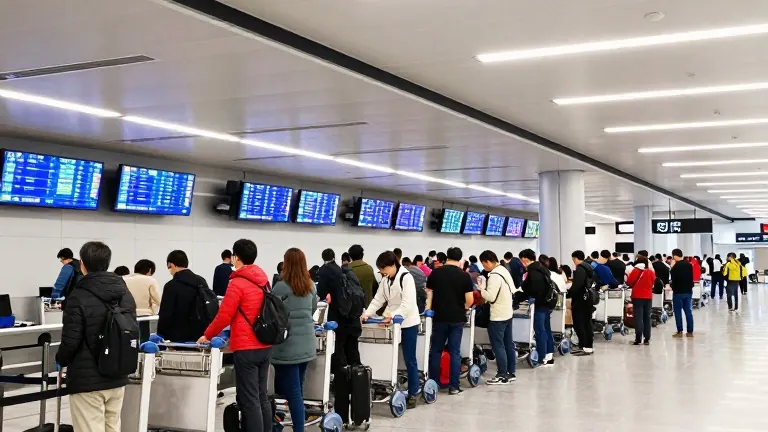
Israeli residents abroad are canceling trips or flying home to cast ballots in Tuesday's Knesset election. Channel 13 reported Sunday that passenger traffic at Ben-Gurion Airport has shifted sharply, with arrivals now outnumbering departures by a wide margin.
The shift reflects a preference for voting over travel in the final days before the election on October 27. Fewer Israelis are leaving the country than in previous years, while those abroad are coming back at higher rates. This pattern suggests many citizens are altering their schedules to ensure they can participate in the general election.
Airport records for the period between October 17 and 27 show a clear drop in outbound travel. In 2026, approximately 245,000 passengers departed Israel during this window. That number is lower than the 270,000 departures recorded in the same period in 2025, which followed the end of the war. It is also far below the 323,000 departures seen in 2022, the last time Israel held a general election.
The decrease in departures is striking because more flights and aircraft are available to travelers now than in past years. Despite better access to air travel, fewer people are choosing to leave before the vote.
Incoming traffic tells a different story. No large-scale airlift of special flights was organized to bring voters home. Instead, returning citizens used existing commercial routes. Even without dedicated voter flights, the number of people entering the country has significantly outpaced those leaving. The gap between incoming and outgoing passengers has surpassed 90,000 in 2026, compared with a difference of about 77,000 in 2025.
This numerical difference could influence the outcome of the election. Channel 13 estimated that 90,000 eligible voters casting valid ballots would be equivalent to roughly two Knesset seats. The calculation matters because Israel's electoral threshold is 3.25% of valid votes. Small shifts in turnout can determine whether parties near that line win representation in the 120-seat parliament.
The airport data does not prove that all returning passengers came solely to vote. The figures include children and foreign nationals who cannot participate in the election. A recent Fly&Vote survey estimated that about 67,000 Israelis living abroad intended to travel home to vote, based on registration data and voluntary responses. Most overseas citizens must return to Israel to vote, as remote voting is not widely available.
Alon Ben-Gurion, grandson of Israel's first prime minister, traveled from the United States to Tiberias to cast his ballot. He arrived with his family, illustrating the effort some overseas citizens are making to participate. Organizers had arranged dedicated flights from New York and Lisbon in August to meet demand, though legal proceedings initiated by Likud later restricted the activities of the Fly&Vote coalition.
Source: The Jerusalem Post