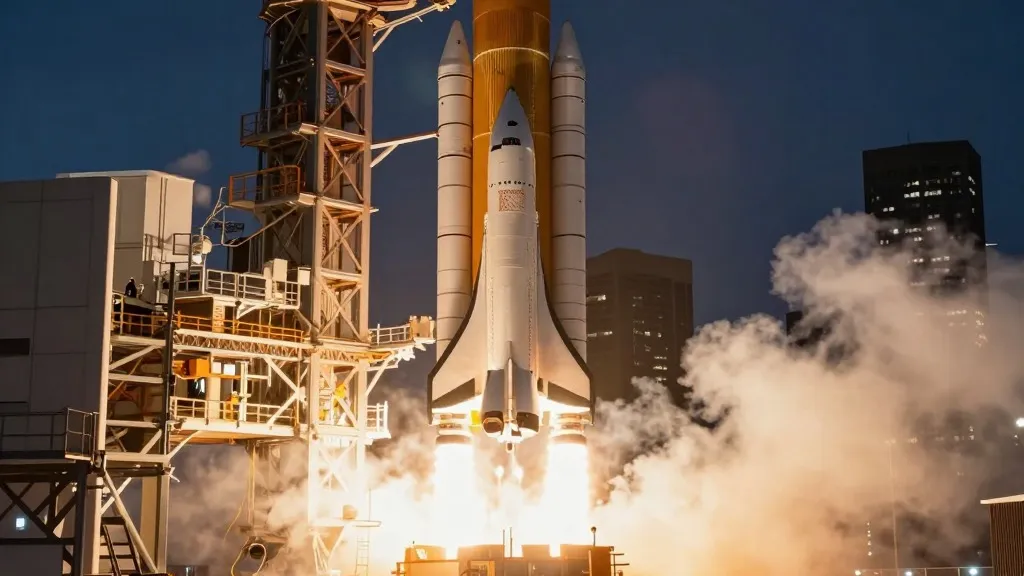
NASA shifts Moon landing strategy to boost 2028 targets
The agency has revised its architectural plans for both SpaceX and Blue Origin to streamline operations and maintain the schedule for the next lunar crewed missions.
By Naomi Whitaker ·

NASA has officially restructured its plans for returning humans to the Moon, addressing long-standing technical hurdles that threatened the agency's aggressive timeline. During a detailed briefing held this week, space agency leaders outlined specific changes to how the Orion spacecraft will interact with commercial landers. The primary goal remains the same: a crewed lunar landing by 2028. However, the method for getting there has shifted significantly to accommodate the evolving capabilities of private partners.
The most substantial change involves SpaceX. Under the new architecture, the Orion crew capsule will no longer need to dock with the Starship lander in the complex orbits near the Moon. Instead, the two vehicles are now expected to connect in high-Earth orbit before making the journey to the lunar surface. This adjustment simplifies the mission profile and reduces the energy requirements for the spacecraft, a key concern raised by SpaceX engineers earlier this year.
Blue Origin’s path to the Moon has also been refined. The updated plan for the company involves four separate launches of the New Glenn rocket. Notably, this configuration removes the need for spacecraft-to-spacecraft refueling in orbit. While the Blue Moon lander is still expected to rendezvous with Orion in low-Lunar orbit, the streamlined launch sequence aims to reduce operational complexity and potential points of failure.
Agency officials reaffirmed their target dates during the presentation. They continue to anticipate that the Artemis III mission, which serves as a critical demonstration of docking capabilities for both the Blue Moon and Starship vehicles near Earth, will launch in the summer of 2027. Following this test, the agency is tracking toward a 2028 launch for Artemis IV, the mission that would actually place astronauts on the lunar surface.
NASA Administrator Jared Isaacman expressed confidence in the revised roadmap. He stated that the agency possesses the necessary mandate, resources, and stakeholder support to execute the plan. Isaacman emphasized that this is an achievable path and that the organization intends to follow through on its commitments to bring the program to fruition.
The shift in strategy comes after a period of intense review by NASA leadership. Officials took a close look at every element of the Artemis Program to identify areas where changes could help the lunar lander companies accelerate their efforts. This proactive approach aims to remove bottlenecks and ensure that the commercial partners can operate within a more efficient framework.
One of the major obstacles for SpaceX was the previous requirement to dock with Orion in a near-rectilinear halo orbit around the Moon. This type of orbit demanded significant energy and presented other technical difficulties. The cancellation of the Lunar Gateway project earlier this year effectively solved this problem for SpaceX by changing the mission architecture and removing that specific docking requirement.
While much of the underlying information about these changes had been previously reported by industry observers, this week's conference marked the first time NASA laid out the full scope of the revisions in detail. The agency acknowledged that these substantial changes to the architecture are necessary to keep the program on track for its 2028 goal.
Source: Ars Technica · original report published