ICE deputizes 29,000 local officers in eight months
A new analysis shows that state and local agencies are making the majority of immigration arrests in several states, driven by federal funding and specific enforcement models.
By Naomi Whitaker ·
The federal government has rapidly expanded its reliance on state and local police to conduct immigration enforcement, doubling the number of deputized officers in just eight months. A report released by the advocacy group FWD.us details that more than 29,000 state and local officers were certified under the 287(g) program between January 2025 and October 2026. This figure far exceeds the 11,600 deportation officers directly employed by Immigration and Customs Enforcement.
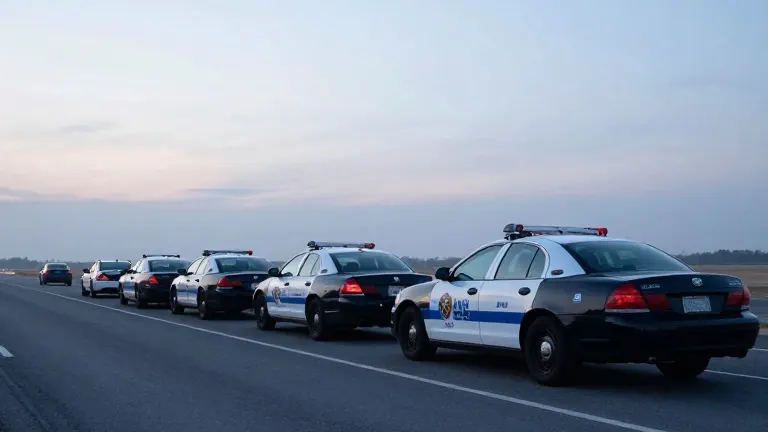
Felicity Rose, vice president of research and policy at FWD.us, describes these local officers as a central mechanism for the administration's enforcement strategy. Rose notes that the approach shifts focus from large, public urban raids to routine traffic stops. She told NPR, "These state and local officers are a key lever in the administration's quieter approach to enforcement. They're trading what used to be splashy urban surges, which we saw in Chicago and Minneapolis, for just routine highway stops now under the 287(g) program." The program, established in the 1990s, saw minimal use before the current administration.
Financial incentives play a major role in the expansion of these partnerships. The Justice Department allocated $3 billion in funding to state and local agencies joining the program earlier this summer. These funds cover staffing and equipment. Florida has already provided hundreds of millions of dollars to local law enforcement for their participation. Under the most common Task Force Model, local agencies receive money for new cars and equipment as long as they maintain active enforcement activity. The Department of Homeland Security states that 287(g) is a critical tool for reducing crime and illegal immigration.
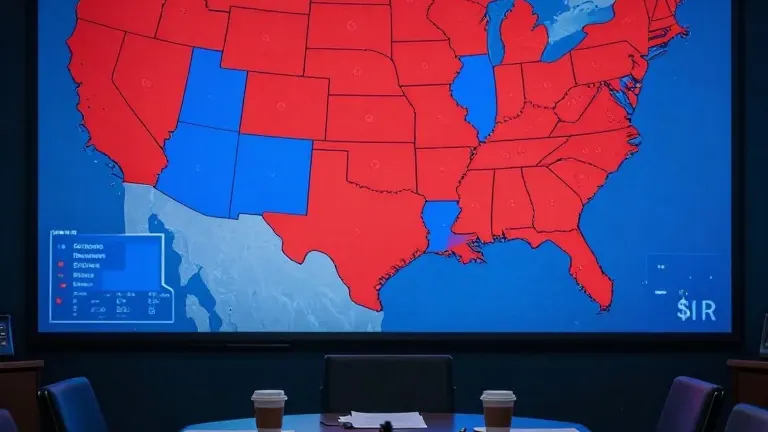
Enforcement is not evenly distributed across the country. FWD.us found that agencies in Florida and Texas accounted for approximately half of the 47,000 immigration arrests made nationally between January 2025 and August 2026. Governors in both states mandated that local police sign the agreements. However, states not traditionally associated with aggressive enforcement are also seeing high participation rates. In Wyoming, deputized officers made 77% of all immigration arrests in April 2026 and over 60% every month since November 2025. In New Hampshire, the program generated 60% of immigration arrests in June 2026.
Oklahoma offers a distinct example of how the program affects daily life. The state highway patrol enrolled all its troopers in 287(g), granting them the authority to stop drivers and make immigration arrests on state highways. Gabriela Ramirez-Perez, an immigration and economic security policy analyst at the Oklahoma Policy Institute, reports that close to 50% of immigration arrests in the state in June were made by state or local police. She says this has created a chilling effect, with residents changing their routines to avoid driving. "Even though Oklahoma may not be in the headlines, it's definitely a hotspot for immigration enforcement," Ramirez-Perez said.
Source: KNKX Public Radio