Carney Signs Turkey Pact Amid Human Rights Scrutiny
The Prime Minister defended the new strategic partnership by distinguishing diplomatic engagement from full endorsement, while dismissing U.S. accusations of election interference.
By Aisha Saeed ·
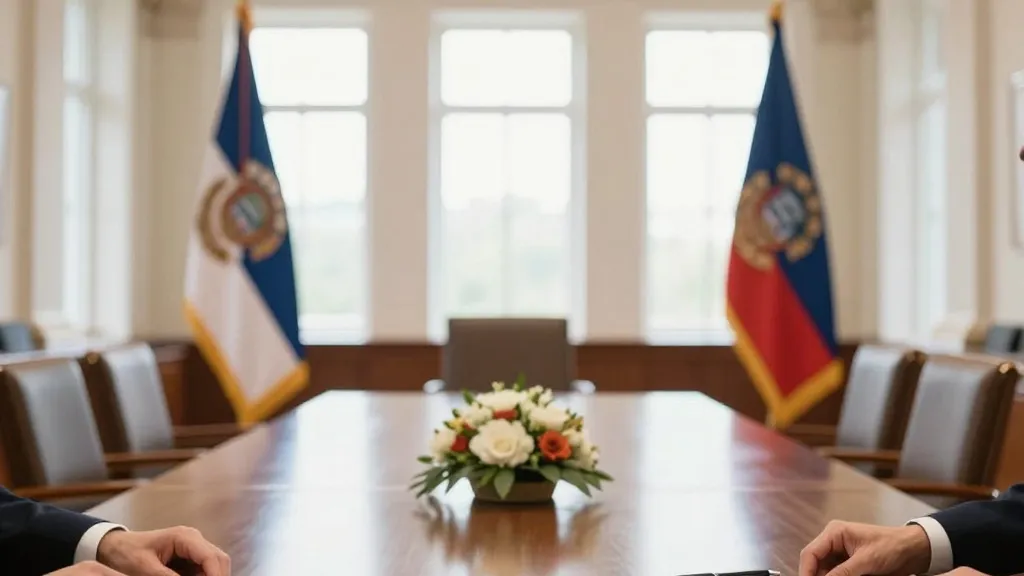
Canada signed a strategic partnership agreement with Turkey on Friday, a move that reinforces Prime Minister Mark Carney's drive to diversify trade away from the United States despite ongoing criticism of Ankara's human rights record. The agreement was concluded near the end of Carney's visit to the country, marking a significant step in bilateral relations.
Carney argued that the deal reflects a policy of values-based realism, a framework he has previously articulated to explain how Canada manages relationships with partners who do not share every domestic standard. He stated that few nations in the world currently match Canada's internal standards, implying that a high bar for international partners is unrealistic for broad economic engagement.
Human rights advocates have intensified their criticism of the Turkish government this month. These groups point to recent high-profile operations by Turkish authorities that they say aim to silence opposition voices, suppress independent journalism, and restrict marginalized communities. This backdrop has cast a shadow over the diplomatic and commercial goals of the visit.
Foreign Affairs Minister Anita Anand reportedly raised human rights concerns with her Turkish counterpart during meetings on Thursday. When asked if he personally discussed these issues with President Recep Erdogan, Carney declined to provide specific details. He emphasized his preference for direct and open conversations with leaders, noting that such discussions are often more effective when they are not reported in exhaustive public detail.
The partnership signing was accompanied by business meetings in Istanbul, where Carney engaged with industry leaders. A key area of potential cooperation involves nuclear technology. Carney indicated there are good chances that the Canadian engineering firm AtkinsRealis will be selected as a partner to build two power plants that Turkey is planning as it works toward its climate goals.
The broader strategic context involves Carney's effort to reduce Canada's economic dependence on the U.S. market. While previous diversification efforts have focused on Europe and the Indo-Pacific, the government has also engaged with other states that have faced scrutiny over their human rights records, including recent interactions with Saudi Arabia.
Carney also addressed external diplomatic friction on Friday. He responded to allegations that Canada has interfered in the upcoming U.S. midterm elections scheduled for November 3. The U.S. Embassy in Ottawa released a fact sheet on Thursday formally accusing Canadian leaders of meddling in the process.
Dismissing the accusations, Carney stated that there is no merit to the claims and expressed disappointment that the U.S. envoy viewed it as part of his role to make such suggestions. He reminded reporters that Canada maintains a deep diplomatic presence in the United States and has extensive contact with American companies and citizens, adding that the country is very careful to avoid being seen as interfering in the American democratic process.
Source: CBC News