46 of 187: The quiet cost of running in a partisan safe seat
Two candidates in opposite corners of the country describe the financial and personal toll of challenging entrenched party majorities in the House.
By Naomi Whitaker ·
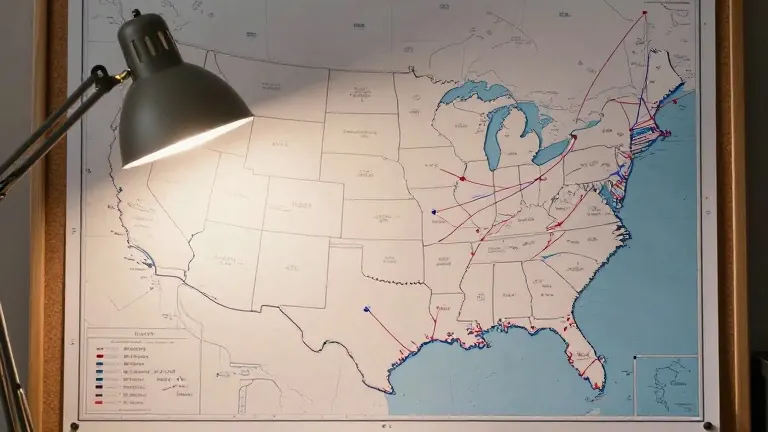
Running for Congress against the political grain means fighting with limited staff, shrinking donor pools, and a high probability of defeat. Lisa Kinney, a Democrat, faces a Republican incumbent in Wyoming, a state that has only sent Republicans to the House since the late 1970s. George Austin, a Republican, runs in Connecticut, where Democrats have won 45 consecutive House seats since 2008.
Kinney campaigns in Casper, Wyoming, without a dedicated office. She travels extensively to meet voters in person, a strategy she believes increases their comfort voting for her. Her husband, Rodney Lang, a former state senator alongside her, notes that even a loss strengthens the local party infrastructure. Kinney describes herself as a moderate who can speak to both parties, a stance that contrasts with an advertisement from her opponent placing her next to Bernie Sanders and Zohran Mamdani.
In Connecticut, Austin, a home builder and former football coach, has invested $250,000 of his own money into his campaign. He serves as his own scheduler and volunteer coordinator. The district is represented by Joe Courtney, who has won reelection for 20 years. Austin argues that the lack of variety in representation requires a challenge, even if the odds are long.
Eric Ostermeier, founder of Smart Politics, notes that 19 state delegations are currently unified under a single party. This is the highest number seen since 1953. He attributes this entrenchment to gerrymandering, geographic sorting of voters, and the difficulty state candidates face in separating themselves from national party identities.
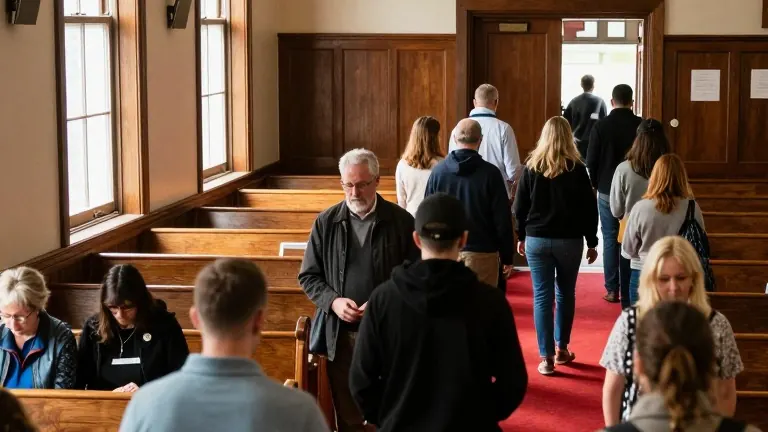
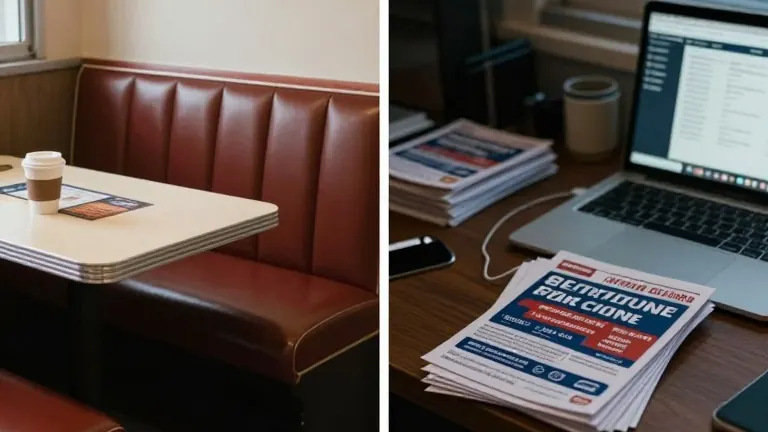
Austin says voters often disengage when they learn he is a Republican, frequently asking if he voted for Donald Trump. He attempts to shift conversations to gridlock, term limits, and artificial intelligence regulation. Kinney faces similar skepticism in local diners. One voter, Joe Beck, told her she has an uphill battle in the reddest state in the nation but said he has already voted for her.
In Connecticut, 46 of the state legislature's 187 seats are uncontested. Austin says he is running to serve as a catalyst for other working people. He warns that the race is not for everyone and requires a deep commitment to the cause, not just a casual effort.
Kinney acknowledges that many voters will choose the candidate with an R next to their name. She maintains that she can win. Austin says he does not view his race as a lost cause. He believes that lost causes are often the most worth fighting for.
Source: KPBS