SpaceX Launches Latest Starlink Batch From California as Falcon 9 Launch Pace Slows
A Falcon 9 carried 27 Starlink satellites to orbit from Vandenberg Space Force Base on Oct. 23, even as SpaceX's transition to Starship cuts into the workhorse rocket's flight rate.
By News Media House Staff ·
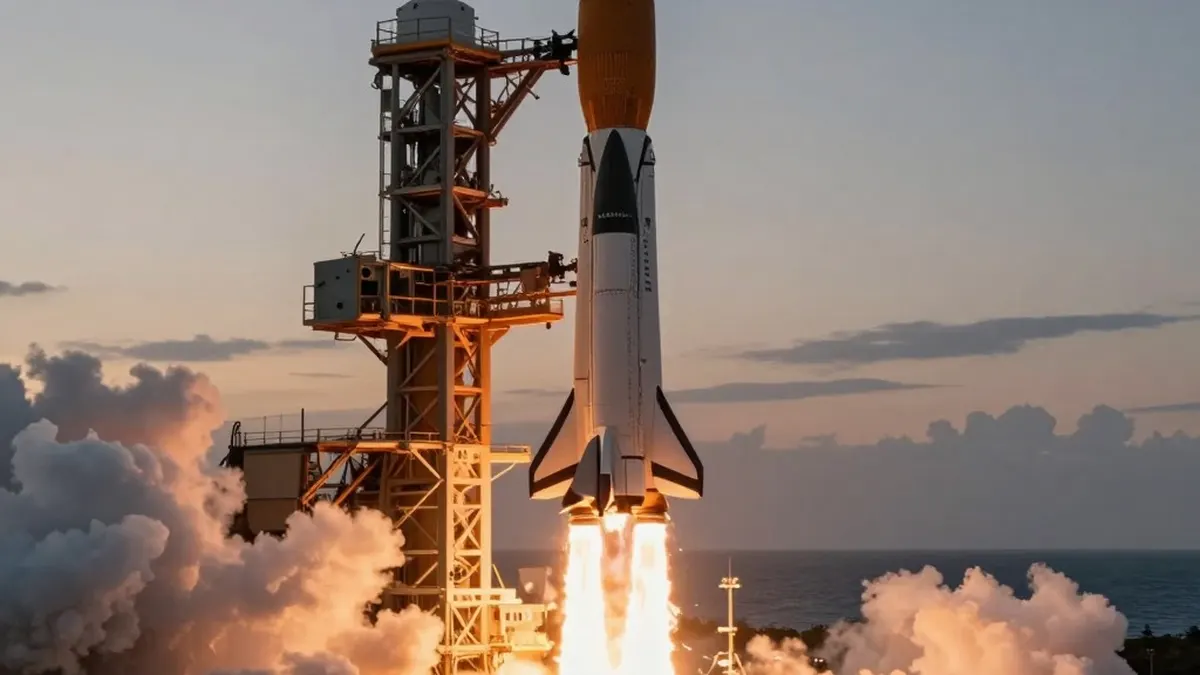
SpaceX sent another group of Starlink broadband internet satellites into orbit on Oct. 23, lifting off from the California coast at a time when the company's Falcon 9 rocket no longer flies as often as it once did.
The 27 spacecraft of Starlink Group 15-15 were stacked inside the payload fairing of a Falcon 9 that rose from Pad 4E at Vandenberg Space Force Base at 6:48 p.m. EDT (2248 GMT), which was 3:48 p.m. local time in California.
The first stage booster, designated B1063, cut off its main engines and separated from the upper stage about 2.5 minutes into flight, while the second stage pressed on toward low Earth orbit. The two-piece fairing that shielded the satellites during ascent was jettisoned just before the three-minute mark.
B1063 then reoriented itself for the trip back to Earth. After the mission clock passed eight minutes, the booster lit its engines for a landing burn and touched down roughly 20 seconds later on the droneship "Of Course I Still Love You." It was the 36th launch and landing for the veteran booster, which notably lofted NASA's DART asteroid-smashing mission in November 2021.
The Falcon 9's upper stage completed its first engine burn shortly after the booster landed and was set to coast for about 45 minutes before a second and final orbital insertion burn. Deployment of the 27 satellites into low Earth orbit was scheduled to begin 62 minutes after liftoff.
The mission adds to a Starlink constellation that now numbers more than 11,000 active spacecraft, but such launches have grown less frequent as SpaceX shifts its focus from the Falcon 9 to its bigger and more powerful Starship rocket. Starship is designed for full reusability and has a payload bay built to carry the upgraded Version 3 Starlink satellites, which are too large for the Falcon 9. The vehicle remains in development, but once operational flights begin, SpaceX plans to phase out the Falcon 9 and its Falcon Heavy variant almost entirely.
Signs of that transition are already visible. The Falcon 9's 100th launch of 2026, the Starlink 10-49 group from Cape Canaveral Space Force Station, was later revealed to be the final Falcon 9 Starlink mission to fly from Florida's Space Coast, and the same could soon hold true for Starlink launches from the West Coast. At their peak, these missions flew every two to three days, but the most recent Starlink launch before Oct. 23 lifted off 11 days earlier, and that flight was itself the first in more than three weeks.
The Oct. 23 mission was the 116th Falcon 9 flight of 2026, with about three-quarters of this year's launches dedicated to Starlink. The reduced cadence will likely cement 2025, when the rocket completed 165 launches, as the Falcon 9's busiest year ever. At its current rate, the rocket is expected to fly just under 150 missions by the end of the year.
Originally published by News Media House · Source: Space.com